
 BitcoinHyper - Bitcoin Hyper finally unlocks fast and cheap Bitcoin transactions by delivering the first ever Bitcoin Layer 2 blockchain.
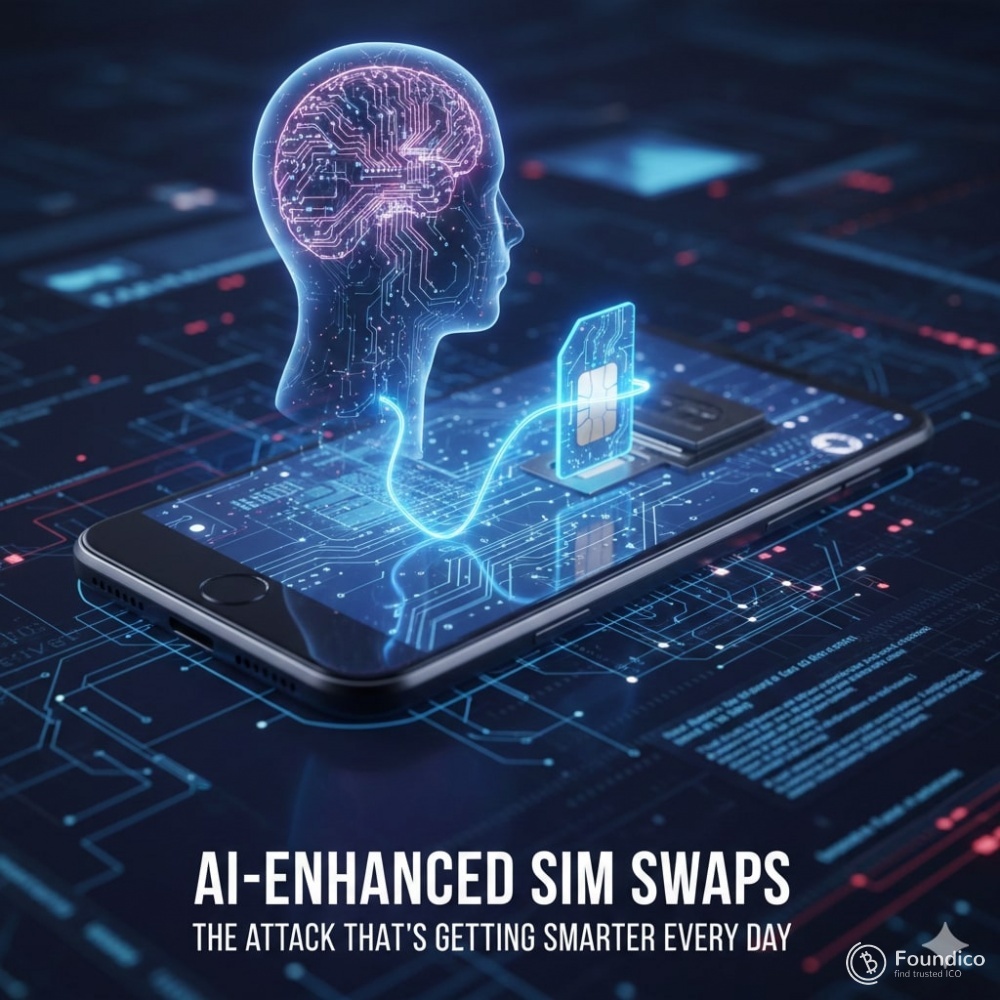
AI-Enhanced SIM Swaps: The Attack That’s Getting Smarter Every Day
By Dr. Pooyan Ghamari, Swiss Economist and Visionary
The Silent Storm Brewing in Your Pocket
Imagine waking up to find your phone number hijacked, your bank accounts drained, and your digital life in ruins. This nightmare is becoming all too real with the rise of SIM swap attacks, now supercharged by artificial intelligence. What was once a crude scam relying on human gullibility has evolved into a sophisticated threat that adapts and learns faster than we can defend against it.
SIM swaps occur when cybercriminals convince mobile carriers to transfer a victim's phone number to a new SIM card under their control. This grants attackers access to text messages, including those crucial one-time passwords for banking, email, and social media. But with AI in the mix, these attacks are no longer hit or miss. They are precise, personalized, and perilously effective.
How AI Turns Amateur Hackers into Masterminds
Artificial intelligence is the secret weapon transforming SIM swaps from opportunistic crimes into calculated assaults. Hackers use AI tools to scrape vast amounts of personal data from social media, public records, and data breaches. Machine learning algorithms then piece together detailed profiles of victims, identifying weak points like favorite security questions or recent life events.
Voice cloning technology, powered by AI, allows attackers to mimic a victim's voice during calls to customer service. A few seconds of audio from a podcast or video call can generate convincing deepfakes that fool even trained representatives. Facial recognition evasion techniques further enhance the deception, enabling fraudsters to bypass biometric verifications with generated images or videos.
The result? Attacks that succeed where traditional methods fail, exploiting human trust and technological gaps with eerie accuracy.
Real-World Nightmares: Stories from the Front Lines
Consider the case of a high-profile executive whose SIM was swapped overnight. AI algorithms had analyzed his online footprint, predicting his responses to security challenges. The attacker, armed with a cloned voice, smoothly navigated the carrier's verification process. By morning, millions in cryptocurrency had vanished.
Or think about everyday individuals targeted through AI-driven phishing campaigns. These scams use generative AI to craft personalized messages that lure victims into revealing just enough information to facilitate a swap. Once the number is transferred, the dominoes fall: two-factor codes intercepted, accounts compromised, identities stolen.
These incidents are not isolated. Reports indicate a surge in AI-enhanced SIM swaps, with losses climbing into the billions annually. The attackers are getting bolder, their methods more refined with each iteration.
The Arms Race: Defenses Struggling to Keep Up
Mobile carriers and tech companies are racing to fortify their systems, but AI's rapid advancement keeps them on the back foot. Enhanced verification protocols, like requiring in-person ID checks or app-based authenticators, offer some protection. Yet, AI finds ways around them, adapting to new defenses almost instantly.
Biometric advancements, such as liveness detection in facial scans, aim to counter deepfakes. Multi-factor authentication that avoids SMS altogether, favoring hardware keys or authenticator apps, is gaining traction. Education plays a crucial role too, urging users to limit personal information shared online and enable carrier-specific PINs.
Despite these efforts, the gap widens. AI's ability to learn from failed attempts means each thwarted attack informs the next, making future incursions even deadlier.
Peering into the Crystal Ball: What’s Next for This Evolving Threat
As AI continues to mature, SIM swaps could integrate with other technologies like quantum computing for unbreakable encryption cracking or augmented reality for real-time deception. We might see automated bot networks orchestrating swaps at scale, targeting entire organizations rather than individuals.
The future demands proactive measures. Policymakers must enforce stricter data privacy laws, while innovators develop AI-driven defenses that predict and preempt attacks. Collaboration between tech giants, governments, and cybersecurity experts will be key to staying ahead.
In this digital age, vigilance is our best ally. Understanding the mechanics of AI-enhanced SIM swaps empowers us to protect ourselves, turning potential victims into informed guardians of their own security.