
AI Flooding Communication Channels with Deceptions
By Dr. Pooyan Ghamari, Swiss Economist and Visionary
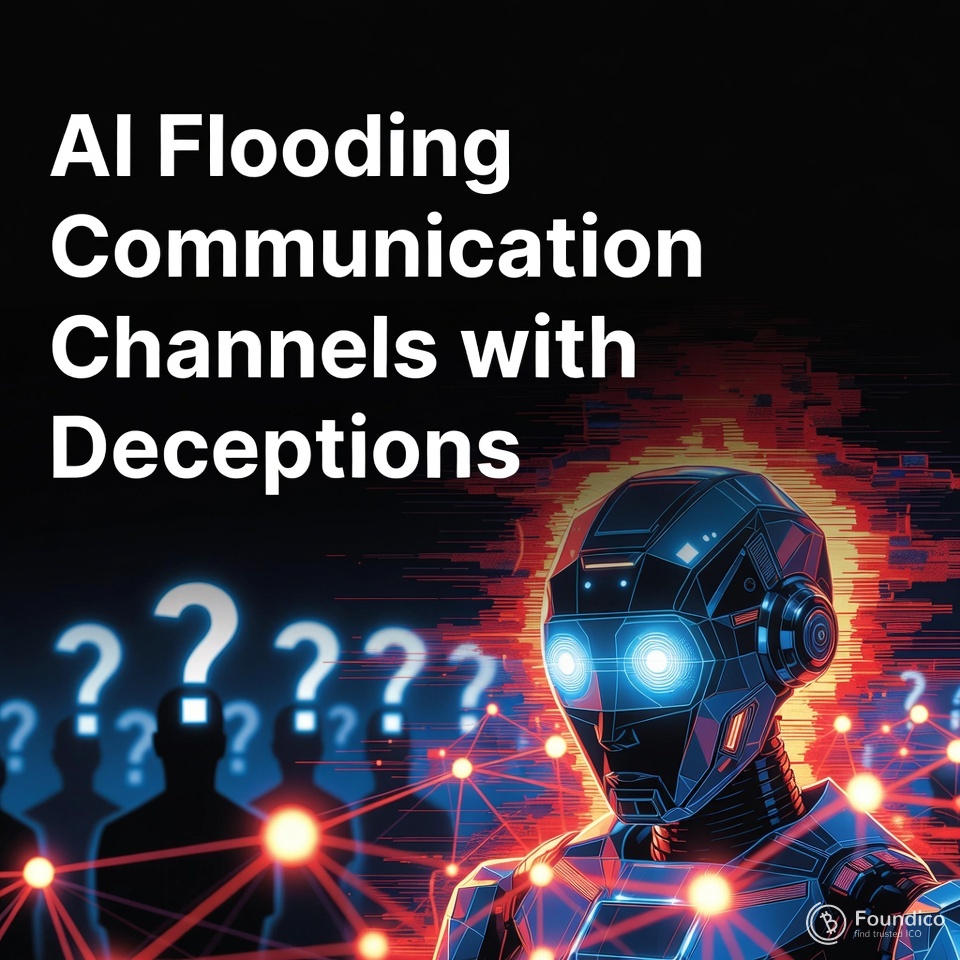
Communication channels once carried the weight of human intent, filtered through effort, accountability, and shared reality. Now artificial intelligence pours synthetic content into every inbox, feed, call, and stream at volumes that drown authenticity. What began as clever tools for creation has morphed into engines of scalable deception, where lies multiply faster than truth can circulate. In early 2026 the flood has become relentless, eroding trust across personal, financial, political, and social spheres.
The Explosion of Synthetic Media Volume
Generative models produce text, images, audio, and video with such ease that billions of deceptive pieces enter circulation daily. Deepfakes alone surged from hundreds of thousands a few years ago to millions by late 2025, with growth rates approaching nine hundred percent annually. Social platforms brim with AI crafted clips mimicking celebrities, executives, and ordinary people in fabricated scenarios. Voice clones require mere seconds of sample audio to replicate intonation, emotion, and breathing patterns perfectly. Text generators churn personalized phishing messages or fake news stories tailored to individual fears and beliefs.
This sheer quantity overwhelms verification efforts. Fact checkers and moderators face an impossible tide where one fabricated video spawns thousands of variants before detection. The result is not isolated incidents but a constant background hum of doubt that makes every message suspect.
Mechanisms of Mass Deception
AI excels at lowering barriers to convincing fraud. Hyper personalized phishing emails reference real colleagues, recent projects, or private details scraped from public profiles, achieving click rates that dwarf traditional attempts. Deepfake video calls impersonate CEOs to authorize multimillion dollar transfers, as seen in high profile corporate breaches. Scam calls flood retailers with thousands of synthetic voices daily, pressuring employees into hasty actions.
Beyond finance, influence operations deploy volume over precision. Networks flood information environments with exaggerated claims, mixed authenticity narratives, and coordinated synthetic personas to sustain confusion. During crises like natural disasters or political events, AI generated flood footage or fabricated apologies from public figures trigger panic and misdirect resources. Health misinformation spreads through cloned doctors endorsing dubious supplements, while political deepfakes distort elections and diplomacy.
Consequences for Trust and Society
When deception scales effortlessly, foundational trust collapses. People question not just headlines but everyday interactions: is this email from a boss genuine, is this voice on the phone familiar, is this video evidence real? Institutions lose credibility as citizens retreat into skepticism or polarized echo chambers where only aligned synthetic signals feel valid.
Financial losses mount into tens of billions annually from AI amplified fraud. Reputational damage hits individuals and brands through nonconsensual deepfakes or fabricated scandals. Democratic processes fray as voters encounter endless tailored propaganda. Psychological tolls emerge too, with increased isolation from eroded human connections and rising anxiety over unverifiable reality.
The most insidious effect is normalization. Constant exposure to deception dulls discernment, training populations to accept uncertainty as default rather than demand clarity.
Navigating the Deluge: Pathways to Resilience
Countering this flood requires multilayered defenses rather than single silver bullets. Cryptographic provenance tools embedded in cameras and devices can watermark authentic content, allowing platforms to prioritize verified media. Advanced detection models trained on emerging deception patterns must evolve in real time, though they risk arms race dynamics with generative adversaries.
Education shifts from spotting obvious fakes to building reflexive skepticism: verify sources, cross reference channels, demand human context in high stakes interactions. Regulatory frameworks must enforce transparency in AI generated content, mandate labeling, and hold platforms accountable for unchecked amplification.
Individuals reclaim agency through analog anchors: face to face conversations, trusted networks, and deliberate pauses before acting on urgent digital prompts. Businesses invest in human augmented verification for critical decisions, preserving accountability loops that machines alone cannot sustain.
Restoring Signal in the Noise
The AI driven deception surge marks a pivotal challenge for civilization. Communication channels risk becoming swamps of synthetic noise where truth struggles to surface. Yet the same technology that floods with lies can empower defenses, from provenance systems to collective vigilance.
The path forward lies in refusing full surrender to automation's ease. By insisting on transparency, fostering critical habits, and blending technological safeguards with human judgment, societies can stem the tide. Trust once lost through deception rebuilds slowly through consistent proof of authenticity. In this era of engineered uncertainty, the most powerful act remains choosing to seek, value, and protect what is verifiably real.