
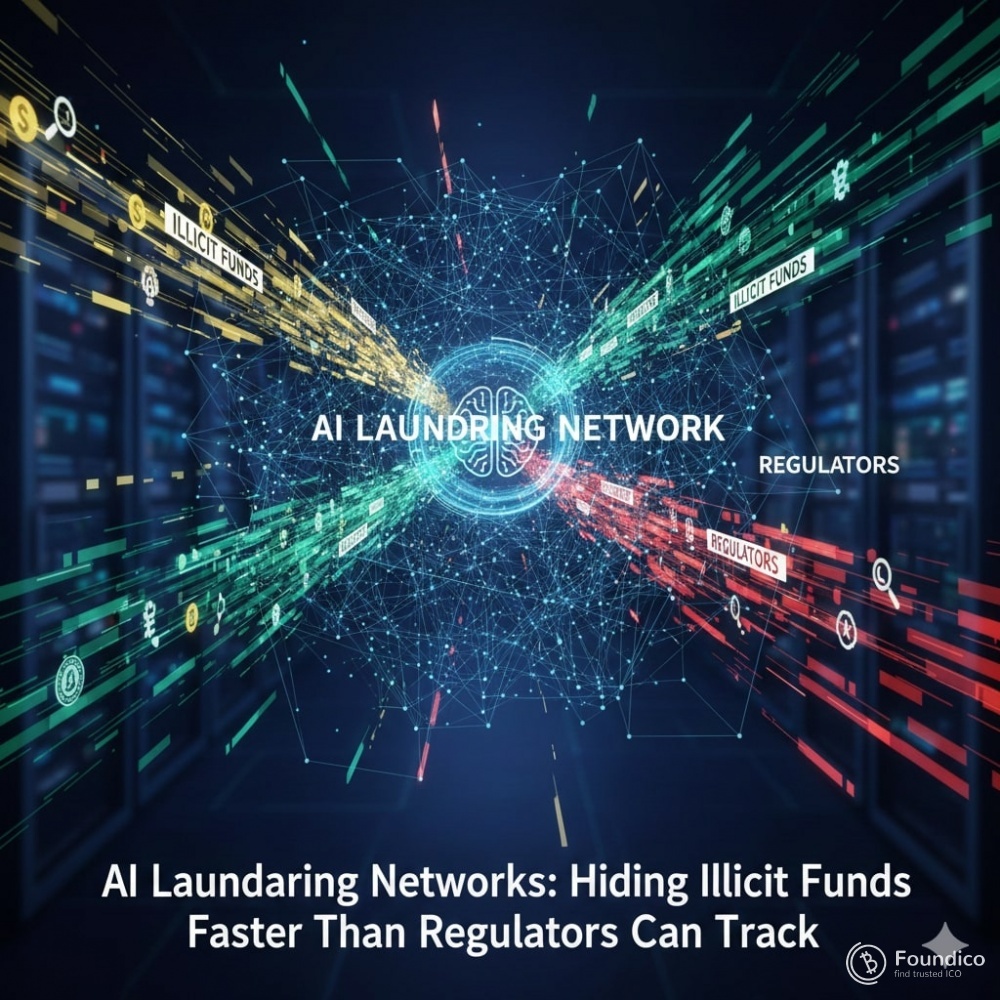
AI Laundering Networks: Hiding Illicit Funds Faster Than Regulators Can Track
By Dr. Pooyan Ghamari, Swiss Economist and Visionary
The Shadowy Rise of Intelligent Money Trails
In the digital age, artificial intelligence has transformed countless industries, but its darker applications are reshaping the underworld of finance. Criminal organizations now leverage AI to create intricate networks that obscure the origins of illegal gains with unprecedented speed and sophistication. These systems operate like invisible webs, weaving through global banking channels and cryptocurrency exchanges, leaving regulators scrambling to catch up.
Imagine a world where algorithms predict regulatory scrutiny and reroute funds accordingly. This is no longer science fiction; it is the reality facing financial watchdogs today. AI driven laundering schemes exploit vast datasets to mimic legitimate transactions, blending dirty money into the clean flow of commerce. The result? Billions in illicit proceeds vanish into the ether, funding everything from organized crime to international smuggling operations.
Algorithms as Master Disguisers
At the heart of these networks lie advanced machine learning models that analyze patterns in financial behavior. These tools can generate thousands of micro transactions in seconds, each designed to evade detection thresholds set by compliance software. By simulating normal economic activity, such as small investments or routine transfers, AI ensures that red flags remain hidden.
Consider how neural networks process real time data from multiple sources. They adjust strategies on the fly, incorporating news about enforcement actions or policy changes. This adaptability allows launderers to stay one step ahead, turning traditional methods like shell companies or offshore accounts into relics of a simpler era. The integration of blockchain technology further complicates matters, as AI optimizes the mixing of cryptocurrencies to break traceability chains.
Regulators in a Digital Fog
Financial authorities worldwide face an uphill battle against these evolving threats. Legacy systems, reliant on rule based monitoring, struggle to identify anomalies generated by intelligent algorithms. Human analysts, overwhelmed by data volumes, often miss subtle shifts that AI spots instantly.
Efforts to combat this include developing counter AI technologies, but progress is slow. International cooperation remains fragmented, with varying regulations across borders creating loopholes ripe for exploitation. Meanwhile, the private sector invests heavily in AI for compliance, yet criminals adapt faster, turning the arms race into a perpetual chase.
The Hidden Costs to Global Economies
Beyond the immediate financial losses, AI facilitated laundering erodes trust in economic systems. Corrupted funds distort markets, inflate asset bubbles, and undermine legitimate businesses. Developing nations suffer disproportionately, as siphoned resources hinder growth and exacerbate inequality.
On a broader scale, these networks fuel geopolitical instability. Illicit capital supports rogue regimes and terrorist groups, amplifying threats to international security. The irony is stark: technology meant to democratize finance now empowers those who operate in the shadows, challenging the very foundations of global order.
Envisioning a Smarter Defense
To counter this menace, a paradigm shift is essential. Regulators must embrace collaborative AI frameworks that pool intelligence across jurisdictions. Investing in quantum computing could provide the edge needed to decrypt complex laundering patterns before they solidify.
Education plays a crucial role too. By raising awareness among financial professionals and policymakers, societies can foster a culture of vigilance. Ultimately, the battle against AI laundering networks demands innovation equal to the threat, ensuring that technology serves justice rather than subverts it.
In this high stakes game, the future of financial integrity hangs in the balance. Will regulators harness AI's power in time, or will the shadows grow longer? The answer lies in our collective resolve to illuminate the darkness.