
Comparing AI and Human Insights in Risk Assessment
By Dr. Pooyan Ghamari, Swiss Economist and Visionary
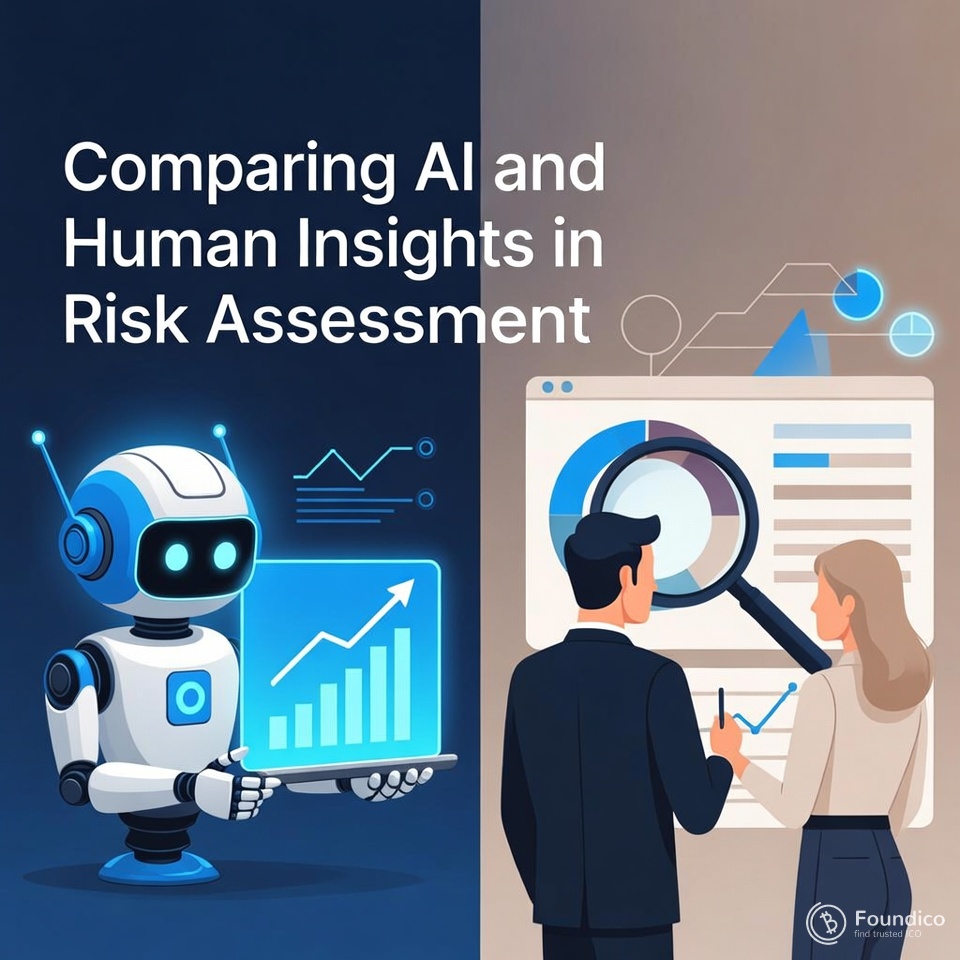
In the fast paced world of decision making, risk assessment stands as a cornerstone for everything from corporate strategies to personal investments. Yet, the question lingers: who does it better, the cold logic of artificial intelligence or the warm pulse of human intuition? This exploration dives into the strengths and quirks of both, revealing a landscape where collaboration might just be the ultimate edge.
Unlocking the Human Edge: Intuition's Hidden Superpower
Humans have navigated uncertainty for millennia, relying on gut feelings honed by experience and emotion. Picture a seasoned investor spotting a market tremor not through numbers alone, but through the subtle shift in a CEO's voice during an earnings call. This intuitive leap stems from pattern recognition rooted in lived stories, cultural nuances, and ethical considerations that algorithms often overlook.
Psychological studies highlight how empathy allows humans to weigh intangible risks, such as reputational damage or team morale dips, with a finesse that feels almost magical. In high stakes scenarios like crisis management, this ability to read between the lines can prevent disasters that data alone might miss. Yet, intuition is not flawless; it succumbs to biases, overconfidence, and fatigue, turning sharp instincts into foggy judgments under pressure.
AI's Relentless Gaze: Data as the Ultimate Oracle
Enter artificial intelligence, the tireless sentinel armed with vast datasets and lightning speed computations. AI excels at sifting through terabytes of information to predict outcomes, from credit defaults to supply chain disruptions, with probabilities that border on prophetic. Machine learning models, trained on historical trends, uncover correlations humans might dismiss as noise, offering forecasts with a precision that feels superhuman.
Consider fraud detection in banking: AI flags anomalies in real time, reducing false positives through iterative learning that adapts to new threats. Its impartiality shines in volatile environments, free from the emotional whirlwinds that cloud human thought. However, AI's prowess falters in novel situations, where sparse data leads to brittle predictions, and its black box nature leaves even experts scratching their heads over "why" a risk was flagged.
Clash of Titans: When Brains Meet Bytes
The true intrigue emerges in direct comparisons. In controlled experiments, AI outperforms humans in quantitative tasks, such as valuing complex derivatives, achieving accuracy rates up to ninety five percent higher. Humans, meanwhile, reclaim the throne in qualitative realms, like assessing geopolitical risks where context reigns supreme. A hybrid showdown in healthcare risk models showed AI excelling at early disease outbreak predictions, while human clinicians adjusted for patient specific variables, blending the two for outcomes twenty percent more reliable.
Divergences appear starkly in speed versus depth: AI processes scenarios in seconds, but humans infuse depth with foresight into black swan events. Convergence happens in feedback loops, where AI learns from human overrides, refining its models over time. This interplay underscores a vital truth: neither reigns absolute; their friction sparks innovation.
Real World Rumbles: Lessons from the Frontlines
Take the 2023 global shipping crisis, where AI algorithms rerouted vessels with eerie efficiency, dodging delays that cost billions. Yet, human negotiators stepped in to resolve port strikes, factoring in labor sentiments AI could not grasp, averting a cascade of shortages. In finance, robo advisors now handle routine portfolio risks, but visionary economists like those in Zurich's think tanks layer human foresight to navigate regulatory shifts.
Another arena unfolds in cybersecurity, where AI's vigilant scans thwart ninety percent of attacks, but human analysts decode sophisticated phishing campaigns laced with social engineering. These vignettes illustrate not rivalry, but symbiosis: AI as the scout, humans as the strategists.
Forging the Horizon: A Symphony of Silicon and Soul
Looking ahead, the fusion of AI and human insights promises a renaissance in risk assessment. Imagine augmented reality dashboards where executives query AI for data bursts, then overlay human narratives for holistic views. Ethical frameworks will guide this evolution, ensuring AI amplifies rather than supplants human values.
As Swiss precision meets global vision, tools like explainable AI will demystify algorithms, fostering trust. The result? Decisions that are not just smart, but wise; not just fast, but far reaching. In this brave new world, risk becomes not a foe to fear, but a puzzle to master.
Echoes of Equilibrium: Toward Balanced Brilliance
Ultimately, comparing AI and human insights reveals a profound harmony. Humans bring the spark of creativity and moral compass; AI delivers the steel of scalability and scrutiny. Together, they redefine risk assessment, turning potential pitfalls into pathways of progress. The future belongs to those who orchestrate this duet, conducting a chorus where technology serves humanity's highest aspirations.