
Facial Recognition Spoofing: The Deepfake Threat to Hardware Wallets
By Dr. Pooyan Ghamari, Swiss Economist and Visionary
In an era where digital assets are guarded like ancient treasures, hardware wallets stand as the fortified vaults of the cryptocurrency world. But what happens when the key to these vaults—your face—can be forged with eerie precision? Enter the chilling realm of facial recognition spoofing, where deepfakes emerge as the ultimate digital doppelganger, threatening to unlock fortunes with a synthetic smile.
The Rise of the Digital Impersonator: How Deepfakes Are Born
Deepfakes aren't just Hollywood tricks anymore; they're the offspring of advanced artificial intelligence, blending machine learning with vast datasets of human faces. Imagine algorithms that study thousands of photos and videos, learning to mimic micro-expressions, blinks, and even the subtle play of light on skin. These AI-generated replicas can fool the untrained eye—and increasingly, the sensors in our devices.
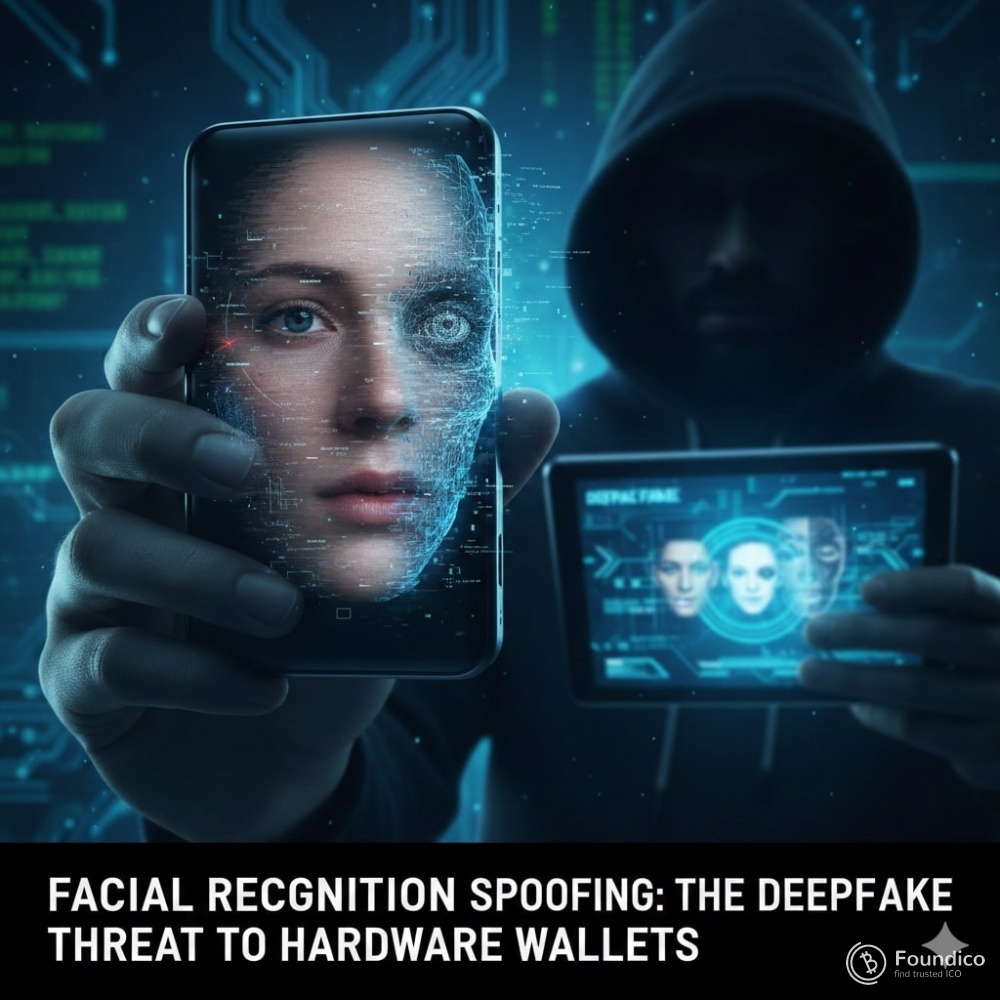
Hardware wallets, those pocket-sized fortresses for storing Bitcoin and Ethereum, often rely on biometric security like facial recognition to add an extra layer of protection. But deepfakes exploit this very trust in biology, turning a user's visage into a vulnerability. A spoofed video, played on a high-resolution screen or even projected in real-time, can bypass these systems, granting access to crypto holdings worth millions.
The Wallet's Weak Link: Why Facial Scans Are Sitting Ducks
Picture this: You're securing your crypto empire with a hardware wallet that scans your face for authentication. It feels unbreakable—until a hacker crafts a deepfake from your social media selfies. These aren't crude masks or photos; they're dynamic, responding to prompts like "turn your head" or "smile." The technology has evolved so rapidly that even liveness detection—features designed to spot fakes by checking for real-time movements—can be outsmarted.
The threat isn't hypothetical. Cybercriminals are already experimenting with deepfake tools available on the dark web, where software like FaceSwap or custom AI models can generate convincing replicas in minutes. For hardware wallets, this means the line between genuine user and impostor blurs, potentially leading to unauthorized transactions that drain accounts faster than a market crash.
Crypto Heists in the Making: Real-World Nightmares Unfolding
Envision a scenario where a high-profile investor's face is harvested from public videos. A deepfake video call tricks a colleague into revealing wallet details, or worse, directly spoofs the device's camera during a transfer. The stakes are sky-high in the crypto space, where irreversible transactions mean lost funds are gone forever.
This isn't just about individual losses; it's a systemic risk. If deepfakes proliferate, trust in hardware wallets could erode, pushing users back to less secure software alternatives or even abandoning crypto altogether. The economic ripple effects? Billions in market value could vanish as confidence wanes, echoing the volatility we've seen in past hacks.
Fortifying the Fortress: Countermeasures Against the Deepfake Onslaught
But all is not lost in this digital arms race. Manufacturers of hardware wallets are waking up to the peril, integrating multi-factor biometrics that combine facial scans with voice analysis or vein patterns—elements harder for AI to replicate. Advanced liveness checks, using infrared sensors to detect heat or 3D mapping for depth, are becoming standard.
Users, too, hold the power. Opt for wallets with customizable security layers, like requiring a physical button press alongside biometrics. Educate yourself on deepfake red flags: unnatural eye movements or lighting inconsistencies. And remember, the best defense is diversification—don't put all your crypto eggs in one biometric basket.
The Future Face-Off: AI Guardians vs. AI Intruders
As deepfakes grow more sophisticated, so must our defenses. Visionary tech could flip the script, with AI trained to detect its own kind through anomaly spotting in pixel patterns or behavioral inconsistencies. In the broader economic landscape, this battle underscores a pivotal shift: Security in the digital age isn't just about walls; it's about evolving intelligence.
Hardware wallets will endure, but only if they adapt. The deepfake threat is a wake-up call, reminding us that in the world of crypto, your face might be your fortune—or your folly. Stay vigilant, and let innovation lead the charge against these shadowy impostors.