
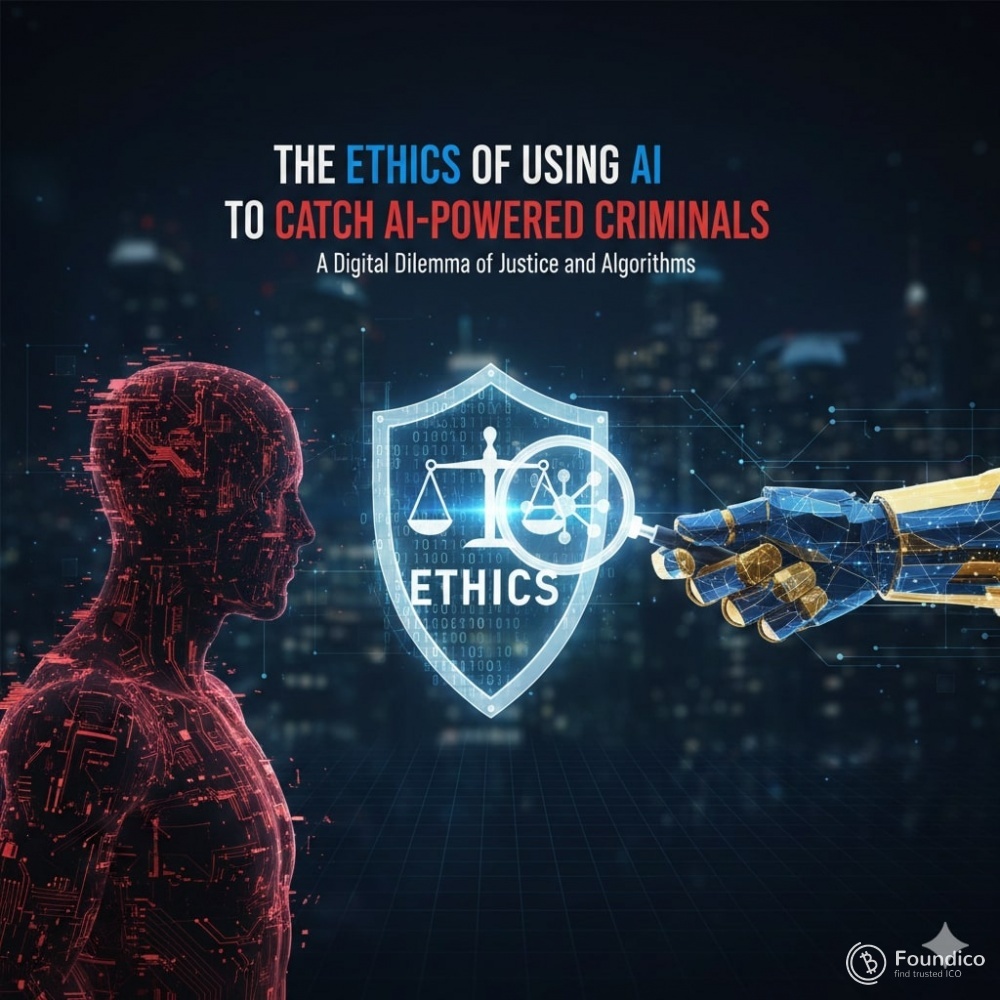
The Ethics of Using AI to Catch AI-Powered Criminals
By Dr. Pooyan Ghamari, Swiss Economist and Visionary
In an era where artificial intelligence weaves itself into the fabric of daily life, a new battleground emerges: the digital shadows where AI enables crime, and AI becomes the hunter. As criminals harness sophisticated algorithms to orchestrate fraud, espionage, and deception, authorities turn to equally advanced AI tools to outmaneuver them. But this cat-and-mouse game raises profound ethical questions. Is it right to fight fire with fire, or do we risk scorching the very principles of justice and privacy?
The Double-Edged Sword of Digital Deception
Imagine a world where deepfakes impersonate world leaders to manipulate markets, or autonomous bots siphon billions from financial systems undetected. AI-powered criminals aren't science fiction; they're the evolving reality of cyber threats. These tools democratize malice, allowing even novices to launch sophisticated attacks. Yet, in response, law enforcement deploys AI for predictive policing, facial recognition, and anomaly detection—systems that promise to preempt chaos. The allure is undeniable: faster justice, fewer victims. But at what cost? When AI scans our every digital footprint, the line between protection and intrusion blurs into oblivion.
Privacy's Fragile Fortress in the Age of Algorithms
Consider the vast data oceans AI systems trawl to identify threats. Every email, transaction, and social post becomes fodder for analysis. Ethically, this mass surveillance echoes dystopian nightmares, where innocence is presumed only after scrutiny. What happens when algorithms, trained on biased datasets, disproportionately target marginalized groups? False accusations aren't mere errors; they're lives derailed. As an economist, I see parallels in market inefficiencies—where over-reliance on flawed models leads to systemic failures. The ethical imperative demands transparency: Who watches the watchers, and how do we ensure AI's gaze doesn't erode the human right to privacy?
Bias: The Hidden Code in Justice's Machine
No AI is born neutral; it inherits the prejudices of its creators and data. In pursuing AI criminals, biased systems could exacerbate inequalities, turning tools of equity into instruments of division. Picture an AI that flags "suspicious" behavior based on outdated stereotypes—reinforcing cycles of injustice rather than breaking them. The ethical quandary here is stark: Can we justify deploying imperfect AI against even more imperfect human malice? Visionaries must advocate for rigorous audits, diverse training data, and ethical frameworks that prioritize fairness over expediency. After all, a society that sacrifices equity for security risks losing both.
The Slippery Slope to a Surveillance Utopia—or Dystopia?
Envision a future where AI preempts crimes before they occur, Minority Report-style. Tempting as it sounds, this predictive prowess treads on free will's sacred ground. Ethically, preempting AI-powered fraud might save economies trillions, but it could also stifle innovation and expression under the weight of constant monitoring. As a Swiss economist, I draw from my nation's legacy of neutrality and privacy—reminding us that unchecked power, even in AI's hands, corrupts. The balance lies in regulation: International standards that harness AI's potential while safeguarding individual liberties. Without them, we slide toward a world where safety is an illusion, bought at the price of freedom.
Forging an Ethical Path Forward: Humanity's Role in the AI Arms Race
Ultimately, the ethics of using AI to catch AI-powered criminals boil down to human choices. We must design systems with built-in accountability, ensuring they serve society rather than subjugate it. This isn't just a technological challenge; it's a philosophical one, demanding interdisciplinary collaboration among economists, ethicists, and engineers. By prioritizing human values—transparency, equity, and respect—we can wield AI as a force for good. The alternative? A perpetual cycle where technology amplifies our worst impulses. As visionaries, let's choose the path that elevates us all, turning potential peril into progress.