
The Human Blueprint of Power: Reading Water, Wind, and Air Across Civilizations
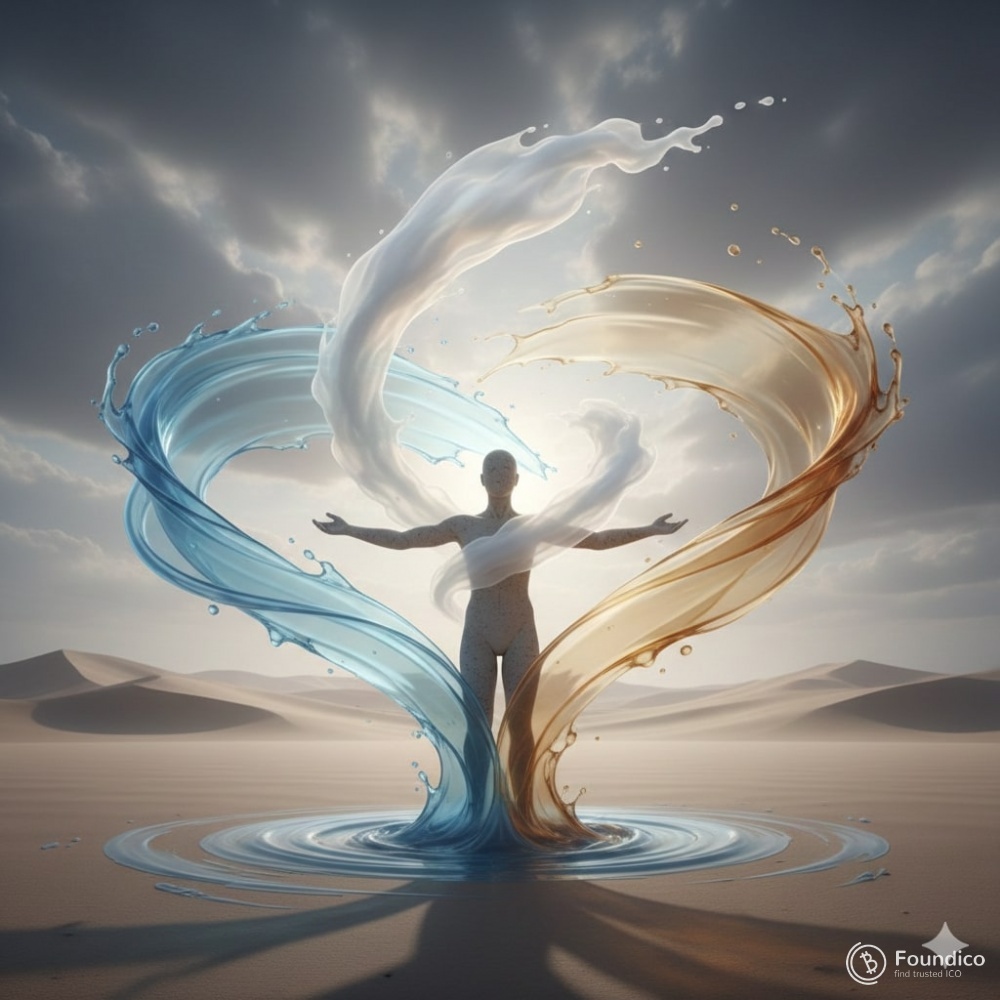
A journey from scripture to philosophy — from the Qur’an to Laozi, from Rumi to Nietzsche
By Dr. Pooyan Ghamari
“This is not a discussion about nature;
it is a discussion about the architecture of power within the human being.”
Prelude: Why are the elements the universal alphabet of power?
For thousands of years, empires have fallen, religions have appeared, philosophies have shifted;
but one idea has been repeated at the heart of all civilizations:
Human beings are powerful only when they are in harmony with the structure of the world — not in conflict with it.
Almost all traditions have seen this harmony in three fundamental symbols:
water, wind, air.
In the Qur’an, Torah, and Gospel
In the Avesta and the Vedas
In the Dao De Jing
In the words of Laozi, Heraclitus, Nietzsche
In the poetry of Ferdowsi, Khayyam, and Rumi
These three elements represent three fundamental states of human power:
• Water — flexibility without collapse
• Wind — motion without stopping
• Air — presence without shouting
This text is a journey through verses, myths, and philosophies
to see why a powerful human resembles water, wind, and air
—not stone and steel.
Water — The Philosophy of Sustainable Flexibility
Water in the Abrahamic scriptures
Qur’an — Water, the origin of life
“وَجَعَلْنَا مِنَ الْمَاءِ كُلَّ شَيْءٍ حَيٍّ أَفَلَا يُؤْمِنُونَ”
Surah Al-Anbiya, verse 30
“We created every living thing from water. Will they not believe?”
This verse is not merely a description of nature.
It is a statement of an ontological law:
Where flow stops, life goes silent.
In the Qur’an, water is the sign of rebirth.
Dead earth revives with rain,
and the dried human revives with the flow of meaning.
Torah — Water, the stage of the first creation
“وְר֣וּחַ אֱלֹהִ֔ים مְرַחֶ֖פֶת עַל־פְּנֵ֥י הַמָּֽיִם”
Genesis 1:2
“The Spirit of God was moving upon the face of the waters.”
Before there is talk of light, sky, or land,
the first scene of creation is water and movement.
In the Torah, water is the symbol of potential—
a formless world ready to accept any form.
Gospel — Water, the second birth
“ἐὰν μή τις γεννηθῇ ἐξ ὕδατος καὶ πνεύματος, οὐ δύναται εἰσελθεῖν εἰς τὴν βασιλείαν τοῦ θεοῦ”
John 3:5
“Unless one is born of water and of the Spirit, he cannot enter the kingdom of God.”
Water is not only the substance of physical life;
it is the symbol of rebirth of awareness,
the beginning of a new mode of being.
Water in Eastern and Western wisdom
Laozi in the Dao De Jing
“The highest goodness is like water.
Water benefits all things and contends with none.
It flows to places others avoid.
Thus it is close to the Way.”
To Laozi, water is the master of powerful humility.
It settles in the lowest places,
yet from there transforms everything.
Thales of Miletus
“Water is the principle.”
The first Greek philosopher believed the essence of the world is water—
everything comes from it and returns to it.
This is not only a physical definition
but an image of infinite possibility.
Heraclitus
“Everything flows, and nothing remains.”
“You cannot step into the same river twice.”
The river is the same and yet never the same.
This is the perfect image of human life.
Bruce Lee — philosophy in the body
He says:
“Be like water, my friend.
If you pour water into a cup, it becomes the cup.
Into a bottle, it becomes the bottle.
It can flow or it can crash.
Be water.”
He understood combat through the philosophy of water—
turning flexibility into weaponry.
Ferdowsi
“From water is warmth, from water is life;
know that the world came from water.”
For Ferdowsi, water is the raw substance of life—
from it comes both warmth and soul.
Khayyam
“Water accepts every shape
but does not lose its nature.”
This short line is a complete manual for identity in a changing world:
Take shape—
but do not lose yourself.
Lesson of Water — The Architecture of Powerful Flexibility
Water silently teaches:
• Take shape, but keep your essence.
• Bypass obstacles, but do not abandon your path.
• Be calm, but never stop moving.
• If you cannot break the stone with a blow,
wear it down drop by drop.
A water-like human is one who
does not freeze in crisis,
creates new paths instead of breaking himself,
does not retreat from obstacles,
only changes his angle.
Water does not die—
it only changes form.
Exercises of Water
Mental Flexibility Training
Break one small habit every day:
• Change your usual path.
• Use your non-dominant hand for a task.
• Listen to an opposing opinion without defending.
• Do a repetitive task with a new speed or order.
The goal:
to teach the mind that flexibility is intelligence, not weakness.
Water Meditation
• Hold your hands under running water.
• Close your eyes.
• Feel how water finds its path without fighting.
• Repeat internally:
“I take shape,
but I do not break.”
Water Night Notes
Write three questions:
Where did I need flexibility today?
Did I resist or did I flow?
If I were water, what would I have done?
Little by little, the mind learns
to flow instead of fracture.
Wind — The Philosophy of Continuous Movement
Wind in the holy texts
Qur’an
“وَهُوَ الَّذِي يُرْسِلُ الرِّيَاحَ بُشْرًا بَيْنَ يَدَيْ رَحْمَتِهِ”
Al-Furqan 48
“He is the One who sends the winds as heralds before His mercy.”
Wind in the Qur’an precedes rain—
a sign that mercy is approaching.
Stillness is not the prelude to change;
movement is.
Torah
The Hebrew word ruach means both wind and spirit.
“God caused a wind to blow over the earth, and the waters subsided.”
Genesis 8:1
Wind in the Torah transforms chaos into balance—
ending one era and beginning another.
Gospel
“There came a sound from heaven, like a rushing mighty wind, and it filled the whole house.”
Acts 2:2
Wind is the symbol of invisible presence—
unseen yet moving everything.
Wind in mysticism and philosophy
Shams of Tabriz
“You stand still and wait for the wind.
The wind blows upon those who are already in motion.”
He clarifies a simple law:
for the one dead inside,
no external wind can perform miracles.
Nietzsche
“One must have chaos within
to give birth to a dancing star.”
That inner chaos is the wind—
a force turning dead order into new dance.
India and China
In India: Vayu
In China: Qi
Both express the truth that:
Life is another name for movement.
Where movement dies, decay begins.
Lesson of Wind — The Architecture of Relentless Motion
Wind tells the human:
• If they shut the door, go through the window.
If they shut the window, pass over the top.
• Power lies in persistence, not speed.
• Long stagnation is the beginning of rot.
• Soft penetration is stronger than harsh impact.
A wind-like human is one who
is always in motion—
even if appearing calm from the outside—
slowly wearing down the world
without being worn down.
Exercises of Wind
The Ten-Minute Rule
Move one unfinished task forward for just ten minutes each day.
No more, no less.
The goal is not finishing—
the goal is not breaking the flow.
The same gentle breeze that, over years,
reshapes a stone.
Wind Meditation
• Go outside.
• Close your eyes.
• Feel the passing of air across your face.
• Say internally:
“I do not stop.
I flow.”
Active Silence
In conversation,
before responding,
pause for three seconds.
This brief gap is the silent wind
that gives weight to your words
and shifts you from reactive to conscious speech.
Air — The Philosophy of Invisible Presence
Air in the Qur’an, Torah, and Gospel
Qur’an
“فَإِذَا سَوَّيْتُهُ وَنَفَخْتُ فِيهِ مِن رُّوحِي فَقَعُوا لَهُ سَاجِدِينَ”
Al-Hijr 29
“When I have fashioned him and breathed into him of My spirit, fall down in prostration before him.”
Man was made from clay,
but meaning entered him through breath.
The distance between a statue and a human
is this breath.
Torah
“The Lord God breathed into his nostrils the breath of life,
and man became a living soul.”
Genesis 2:7
Clay without breath
is only matter.
Gospel
“He breathed on them and said,
Receive the Holy Spirit.”
John 20:22
Breathing is the transfer of consciousness—
not merely of air.
Air in Eastern and Western wisdom
Yoga
Prana means life-force.
Conscious breathing is the guiding of this force.
China
Qi is the energy that moves between heaven and earth
and enters humans through breath.
Rumi
“You are the breath God has breathed.
If your breath becomes conscious,
everything becomes clear.”
He reminds us:
what defines you
is not the body,
but the breath.
Stoics
Pneuma is the warm, living spirit of the world.
Marcus Aurelius says:
“Take a deep breath—
draw the universe into yourself.”
Lesson of Air — The Architecture of Presence
Air teaches:
• The most important things are unseen—
yet without them everything collapses.
• Power lies in capacity, not volume.
• Quiet presence
is stronger than loud presence.
• Awareness of breath
is awareness of being.
A human of air
creates space without occupying it,
is heard without shouting,
is felt without performing.
Exercises of Air
4–4–6 Breathing
For five minutes at the start of the day:
4 seconds inhale through the nose
4 seconds hold
6 seconds exhale through the mouth
Repeat ten times.
This pattern calms the nervous system,
reduces pressure,
and clears the mind.
Presence Meditation
• Lie down or sit.
• Close your eyes.
• Watch only the breath—
not the past,
not the future.
Say internally:
“I am right here.”
Presence Notes
At night, write:
How many moments today was I truly here?
How many breaths did I take consciously?
Where did my presence create calm or clarity for others?
The Three-Element Human
When you connect the three forces,
a simple yet profound formula emerges:
Water — flexibility in crisis
Wind — motion in stagnation
Air — presence in chaos
Such a human:
• does not break, because he is water
• does not stop, because he is wind
• does not get lost, because he is air
This is the human whom:
Nietzsche called the Overman
Laozi called the person of the Way
Buddha called liberated
Ferdowsi called the wise world-knower
Rumi called the awakened lover
Heidegger called being-aware-of-being
Daily Ritual for Becoming Water, Wind, and Air
Morning — Five minutes of day-architecture
1 minute — conscious breathing (air)
2 minutes — visualizing yourself as water:
fluid, flexible, unafraid of change
2 minutes — commitment to movement (wind):
today, however small,
I take one step forward.
Midday — The moment of pressure
When stuck, repeat three short lines:
Water:
I take shape; I do not break.
Wind:
There is a way; I must move.
Air:
I breathe; I am still here.
These lines remind the brain
that breaking is not the only option.
Night — Three Questions
Where was I like water today?
Where did I move like wind?
Where was I simply present like air
and made an impact without noise?
These three questions
gradually transform you into someone who:
is not stone,
but changes stone;
not a sword,
but splits the path;
not a shout,
but subtly tunes the world around him.
Final Words — A Call to a New Way of Being
“You can be water,
which takes the shape of every container
yet never forgets its water-ness.
You can be wind,
which passes through the mountain
without asking the mountain for permission.
You can be air,
always present
even when no one sees it.”
This text is not an ending—
it is a map of beginning.
A beginning for the human who
reaches power
not by hardening
but by flowing,
not by shouting
but by presence,
not by force
but by harmony.
A human who
is water,
and wind,
and air
in a world filled with stone and iron.
With respect,
Dr. Pooyan Ghamari