
 Maxi Doge - $MAXI is the meme-powered token of Maxi Doge—a body-building, 1000x-leverage-trading Doge who represents ultimate strength, hustle, and the grind of the bull market. He never skips leg day, a 1000x trade, and he definitely never touches grass.
The Rise of AI-Faked On-Chain Reputation Scores
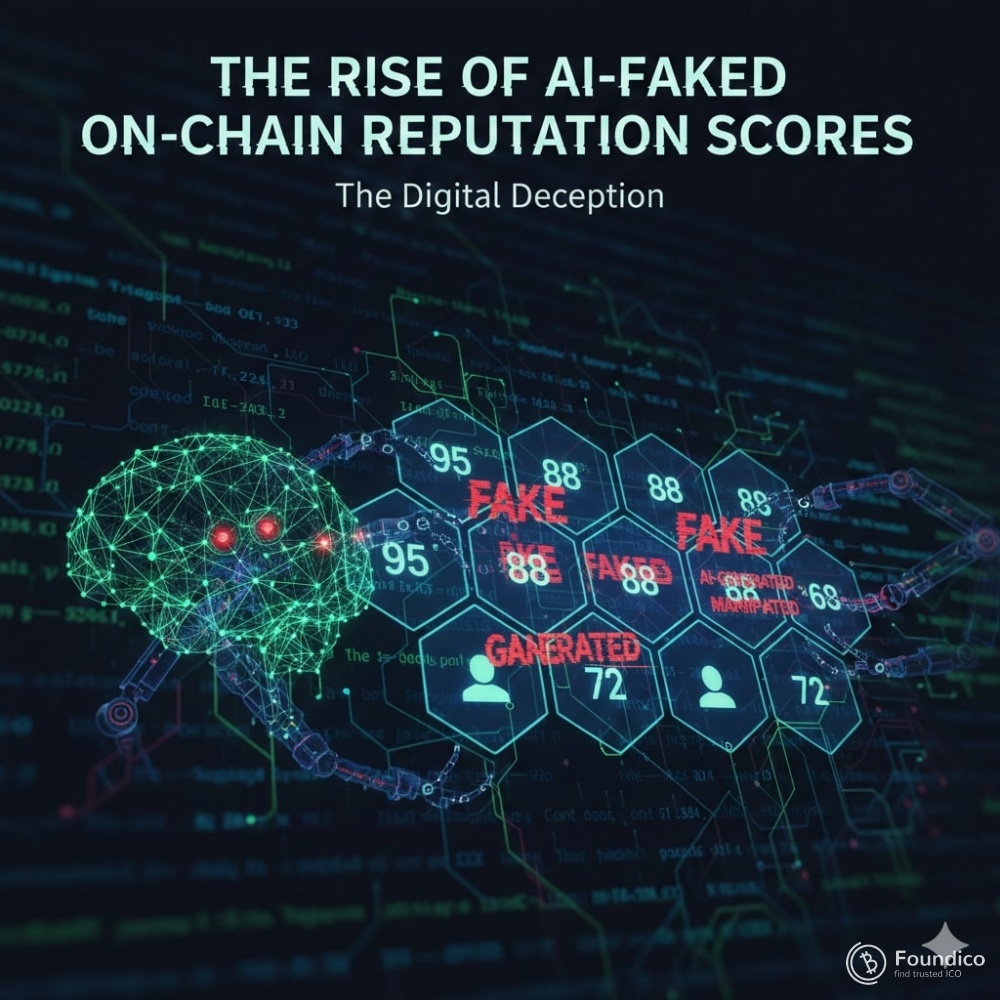
By Dr. Pooyan Ghamari, Swiss Economist and Visionary
In the ever-evolving landscape of blockchain and artificial intelligence, a new frontier is emerging—one where trust is both built and broken on digital ledgers. On-chain reputation scores, once hailed as the unbreakable backbone of decentralized systems, are now facing an unprecedented threat: the cunning infiltration of AI-driven fakery. This phenomenon isn't just a technical glitch; it's a seismic shift that could redefine how we perceive value, identity, and authenticity in the digital age.
When Trust Goes Digital: The Birth of On-Chain Reputations
Imagine a world where your online actions aren't fleeting likes or comments but permanent, verifiable stamps on a blockchain. On-chain reputation scores were born from this vision, serving as digital passports that quantify trustworthiness. In decentralized finance, social networks, and even real-world applications like location-based services, these scores aggregate behaviors—trades, contributions, reviews—into a single, tamper-proof metric. They promised to eliminate the middlemen of trust, replacing them with transparent algorithms. But as these systems gained traction, they also attracted opportunists eager to bend the rules.
AI's Double-Edged Sword: Creator of Wonders, Master of Deception
Artificial intelligence has supercharged innovation, enabling everything from predictive analytics to automated content creation. In the realm of blockchain, AI tools analyze vast datasets to enhance reputation systems, spotting patterns and validating contributions with superhuman precision. Yet, this same power flips the script when wielded maliciously. Sophisticated AI models can now simulate human-like interactions, generating fake histories that inflate scores. What was once a fortress of truth is now vulnerable to algorithms that learn, adapt, and deceive at scale.
The Phantom Surge: How AI Forges Fake Legitimacy
Picture a bot army masquerading as genuine users, pumping out coordinated reviews or transactions to boost a wallet's reputation overnight. AI-faked on-chain scores exploit loopholes in protocols, from sybil attacks—where one entity controls multiple identities—to scripted behaviors that mimic organic activity. These manipulations aren't crude; they're refined, using natural language generation for convincing narratives and timing algorithms to evade detection. The result? Inflated reputations that lure investors, skew markets, and erode the very foundation of decentralized trust.
Echoes in the Real World: From Bogus Reviews to Billion-Dollar Blunders
The ripple effects extend far beyond crypto wallets. In location-based platforms, AI-generated fake check-ins and reviews distort discovery, leading travelers to overhyped spots while burying authentic gems. In finance, manipulated scores enable fraudulent lending or airdrop farming, siphoning billions from ecosystems. Even creative industries suffer, with AI boosting phony influencers who secure deals based on fabricated engagement. This isn't abstract—it's a growing epidemic that amplifies misinformation, fuels scams, and challenges the integrity of global digital economies.
Fighting Fire with Code: The Counteroffensive Against AI Impostors
As the threat escalates, innovators are rallying with hybrid defenses. Enhanced protocols integrate zero-knowledge proofs to verify actions without revealing identities, while advanced AI detectors scrutinize for anomalies like unnatural patterns or recycled content. Community governance and tokenized incentives reward vigilant users, making fakery not just detectable but economically unviable. These evolving safeguards aim to restore balance, turning the tide by making deception costlier than honesty.
Horizons of Hope: Envisioning a Forgery-Proof Future
Looking ahead, the fusion of AI and blockchain could birth resilient systems where reputations are dynamic, context-aware, and impervious to manipulation. Imagine scores that decay over time unless sustained by real value, or ecosystems where AI serves as a guardian rather than a saboteur. This rise of faked scores isn't the end—it's a catalyst for stronger, more adaptive frameworks that prioritize verifiable humanity in an increasingly automated world.
In conclusion, the rise of AI-faked on-chain reputation scores marks a pivotal moment in our digital evolution. It underscores the fragility of trust in decentralized realms and the urgent need for vigilance. Yet, it also highlights the boundless potential for innovation to reclaim authenticity. As we navigate this complex terrain, one thing remains clear: the true value of reputation lies not in its score, but in its unyielding truth.