
When AI Generates Fake Blockchain Explorers to Steal Your Keys
By Dr. Pooyan Ghamari, Swiss Economist and Visionary
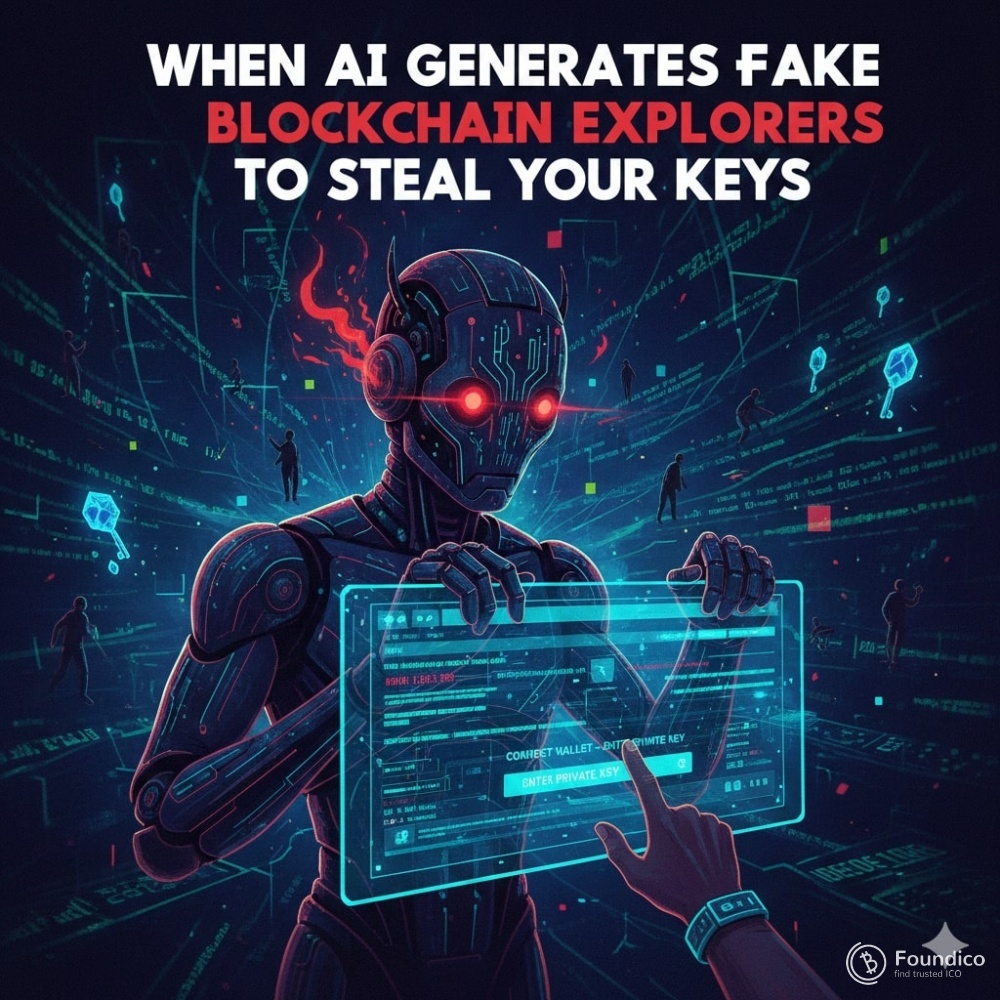
The blockchain was supposed to be the ultimate fortress of trust—immutable, transparent, and decentralized. Yet in the coming years, that very transparency will become the perfect bait for one of the most insidious scams imaginable. Artificial intelligence is quietly mastering the art of forging entire blockchain explorers, those essential tools we all rely on to verify transactions and balances. When the explorer you trust is no longer real, your private keys become the prize. This is not a distant threat; it is the next frontier of digital theft.
Mirror Worlds: AI That Clones Reality Pixel by Pixel
Blockchain explorers like Etherscan, BscScan, and Solana Explorer have become second nature to crypto users. We paste wallet addresses, check transaction histories, and confirm balances without a second thought. Now imagine an AI that can replicate these platforms down to the smallest detail—logos, fonts, layouts, even real-time transaction feeds that look legitimate.
Generative models trained on vast datasets of blockchain interfaces can spin up convincing clones in minutes. These fake explorers pull partial real data from public APIs to appear authentic, while subtly altering critical elements. A transaction that never happened appears confirmed. A token approval you never granted shows as executed. The illusion is flawless because the AI understands both design and blockchain mechanics better than most developers.
The Poisoned Link: How the Trap Springs
The attack vector is brutally simple. Phishing evolves into hyper-realistic deception. An AI crafts personalized emails, Discord messages, or even fake support tickets that mimic official communications. "Urgent: Verify your wallet activity on this secure explorer link." The domain looks almost identical—etherscɑn.io instead of etherscan.io, with Unicode tricks invisible to the naked eye.
Once inside the fake explorer, users are prompted to "connect wallet for detailed view" or "sign a message to sync transactions." That signature? It’s not harmless. The AI has pre-engineered a malicious payload—draining approvals, key exports, or direct transfers disguised as gas optimizations. Victims hand over access willingly, convinced they’re interacting with a trusted tool.
Living Lies: Explorers That Adapt and Survive
What makes AI-generated fakes terrifying is their adaptability. Traditional phishing sites are static and quickly flagged. These explorers are dynamic. The AI monitors visitor behavior, A/B tests layouts for maximum trust, and patches vulnerabilities in real time. If a blockchain adds new security warnings, the fake mirrors them instantly.
Detection becomes a nightmare. The site serves legitimate-looking data to most visitors but triggers the malicious prompt only for high-value wallets identified through on-chain analysis. Low-balance users see nothing suspicious, unwittingly helping the site evade takedown reports. The explorer lives longer, harvests more keys, and disappears only after the AI deems the operation complete.
The Wallet Drain Cascade: Billions at Risk
The economic fallout could be catastrophic. Private keys are the master credentials of crypto wealth. Once compromised, recovery is impossible. AI-orchestrated campaigns could target thousands simultaneously, focusing on whales, DeFi users, and NFT holders whose approvals are ripe for exploitation.
Entire ecosystems could freeze in panic as trust evaporates. Users hesitate to interact with any explorer, slowing legitimate activity. Exchanges and protocols rush emergency measures, but the damage spreads faster than patches. The irony is bitter: blockchain’s openness, the feature that empowers transparency, becomes the vector that destroys it.
Fighting Shadows: Defending Against the Unseen
Countermeasures exist, but they demand vigilance. Hardware wallets with strict signing previews remain the strongest defense—never sign what you cannot read clearly. Bookmark official explorers and never click links. On-chain verification tools that run locally, without web interfaces, are emerging as essential.
Regulators and platforms must collaborate on AI-powered detection that fingerprints synthetic sites through behavioral anomalies and code artifacts. Yet the arms race favors the attacker: creation is easier than verification. The ultimate safeguard may be education—teaching users to treat every unsolicited link as lethal.
The Final Signature: A Future Written in Code
When AI can generate fake blockchain explorers indistinguishable from the real, we enter an era where seeing is no longer believing. Private keys, the bedrock of crypto sovereignty, become fragile artifacts in a world of perfect forgeries.
This is not merely a technical challenge; it is an existential one for decentralized finance. Either we build unbreakable habits and tools to verify reality independently, or we surrender control to illusions crafted by machines. The keys to tomorrow’s wealth are already in the crosshairs—and the hunter is learning faster than we can run.